Balinese Food vs Indonesian Food — What’s the Difference?
Foreign travellers often say “Indonesian food” in Bali — but Balinese cuisine is its own tradition. Spice pastes, pork, ceremonial dishes, and what that means for your trip.

Foreign travellers often search “Indonesian food” while standing in Ubud — but Balinese food vs Indonesian food is a real distinction. Indonesia has hundreds of regional cuisines. Bali’s is shaped by Hindu ceremony, village spice pastes, and dishes you simply will not find the same way in Jakarta.
The big differences at a glance
- Spice paste: Bali’s base genep / bumbu Bali vs Java’s sweeter, kecap-leaning profiles
- Pork: common in Hindu Bali (babi guling); rarer in Muslim-majority regions
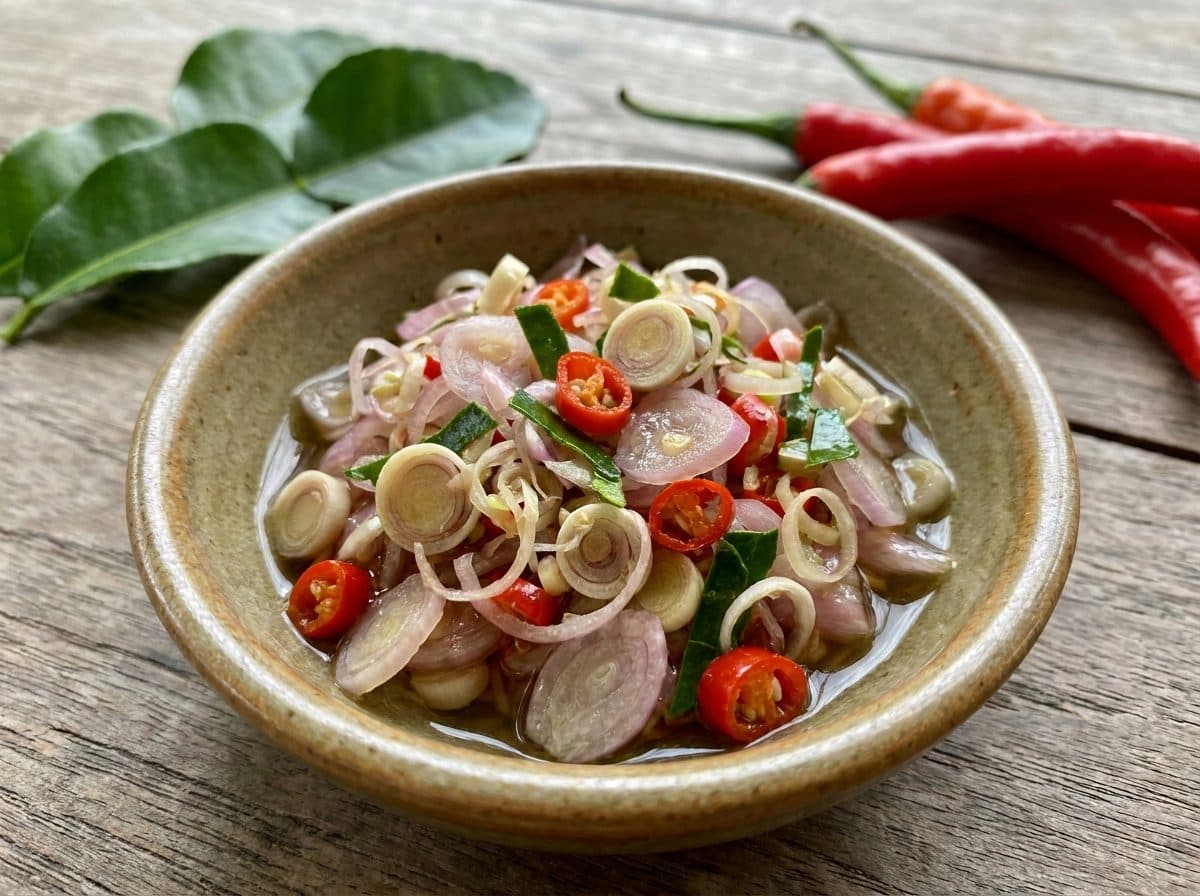
- Sambal: sambal matah (raw shallot–lemongrass) is a Bali signature
- Ceremony: lawar and betutu appear in temple and family rituals
- Everyday plate: nasi campur with distinctly Balinese sides
Base genep — Bali’s flavour engine
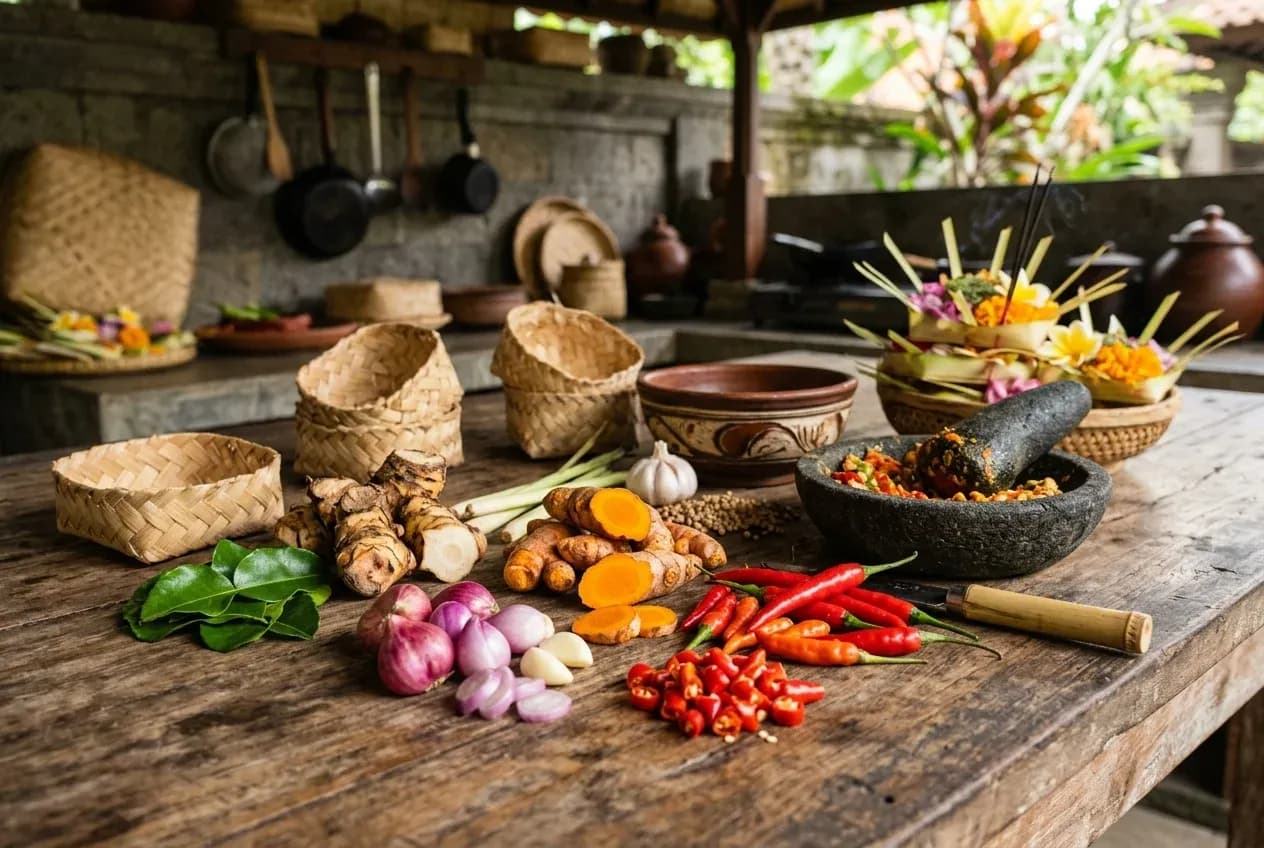
If Indonesian food had regional “mother sauces,” Bali’s would be base genep: shallots, garlic, turmeric, galangal, kencur, chilies, candlenut, lemongrass, and warm spices. Learn it once and you understand warung food island-wide. Guides: base genep recipe and bumbu Bali.
Dishes that are uniquely Balinese
Prioritise these if you want Bali — not generic “Indo”: babi guling, sate lilit, lawar, sambal matah, ayam betutu.
What foreigners already know (pan-Indonesian)
Nasi goreng, mie goreng, gado-gado, and sate with peanut sauce appear all over the archipelago. Eat them — but do not stop there or you will miss what makes Bali different.
Religion and diet on the plate
Bali’s Hindu majority means pork and certain ceremonial foods are everyday culture. Muslim visitors and pork-avoiding travellers still eat extremely well: fish, chicken, tempeh, and vegetarian lawar. See what to eat in Ubud and the vegetarian Ubud guide.
Taste the difference in a cooking class
The fastest way to feel the difference is to grind Balinese paste yourself and cook five or six village dishes in one morning. That is what we do at Tumang Bali — best cooking class in Ubud, book now.