Sambal Matah: The Raw Balinese Sambal Recipe
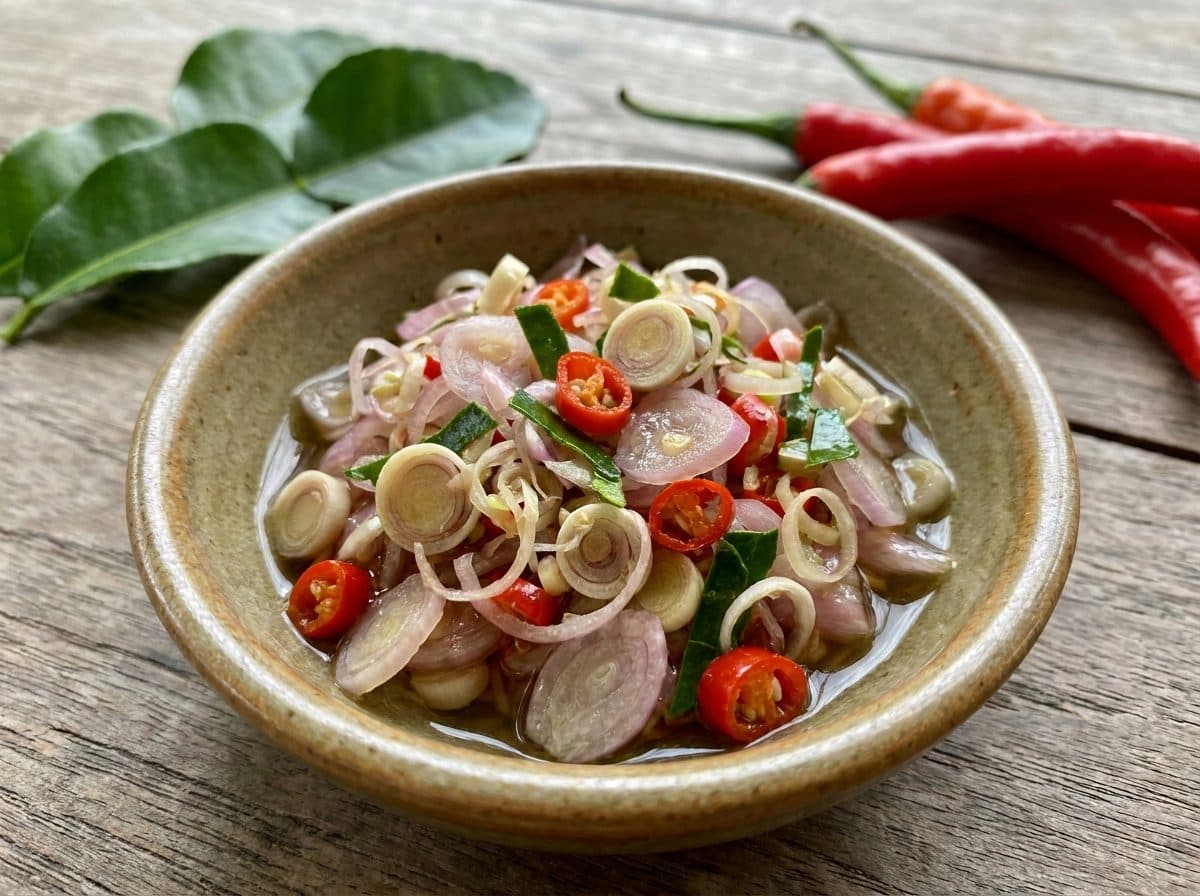
Sambal matah is Bali’s famous raw shallot-and-lemongrass sambal — bright, fresh and fiery. Here’s the authentic recipe we teach in our Ubud classes.
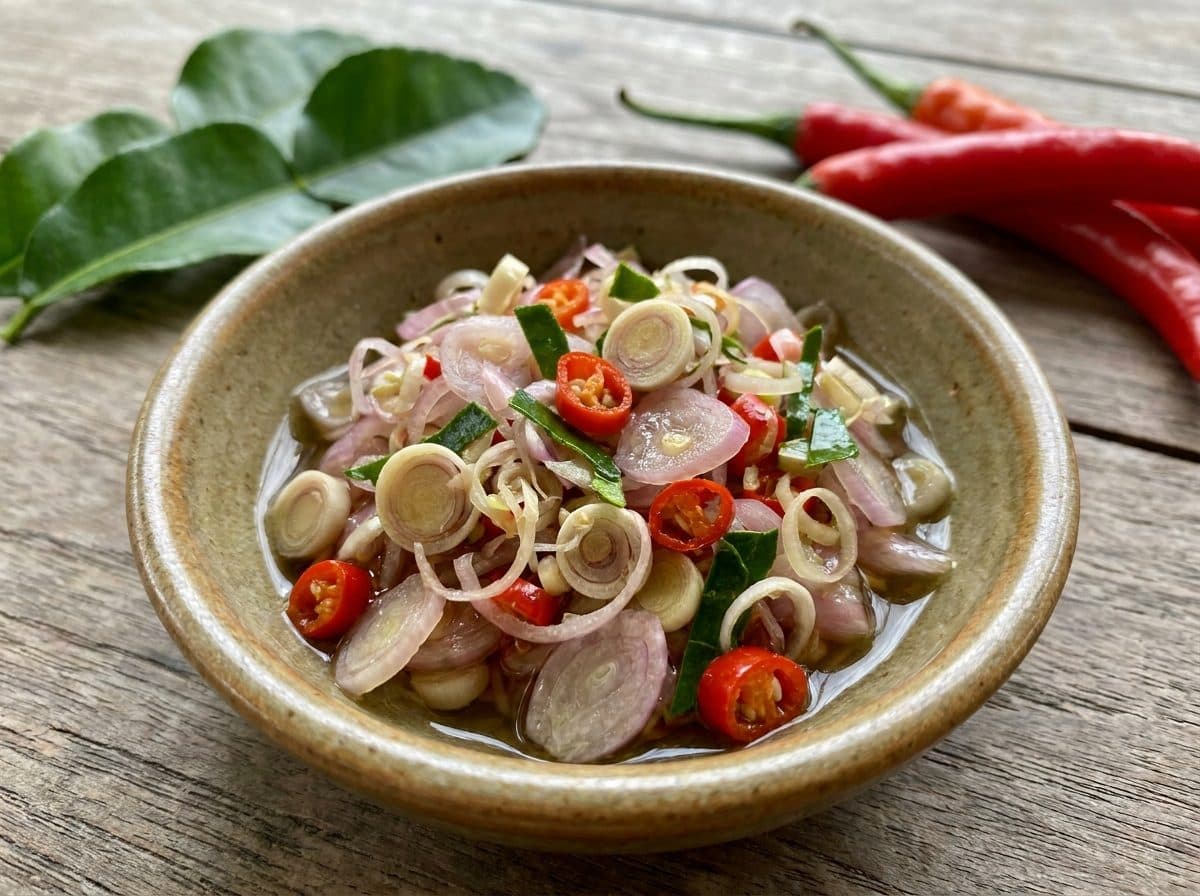
Of all the sambals in Indonesia, sambal matah is the one visitors fall for in Bali. “Matah” means raw — there’s no cooking, just finely sliced aromatics dressed in hot coconut oil and lime. It’s bright, crunchy, fragrant and addictive, and it takes minutes. Here’s the version we teach in class.
Ingredients
- Shallots — 10, very thinly sliced
- Lemongrass — 2 stalks, tender white part only, finely sliced
- Bird’s-eye chillies — 5, thinly sliced (adjust to taste)
- Kaffir lime leaves — 4, central rib removed, very finely shredded
- Garlic — 2 cloves, minced (optional)
- Shrimp paste (terasi) — ½ tsp, toasted (omit for vegan)
- Coconut oil — 4 tbsp
- Lime juice — from 1 lime, plus salt to taste
Method
- Combine the sliced shallots, lemongrass, chillies, lime leaves and garlic in a bowl.
- Heat the coconut oil until just hot, then stir in the toasted shrimp paste until dissolved.
- Pour the warm oil over the aromatics and toss well — the heat lightly softens the edges without cooking them.
- Finish with lime juice and salt. Taste and adjust. Serve at room temperature.
Tips for the best sambal matah
Slice everything as thinly as you can — texture is everything here. Use only the tender lower part of the lemongrass, and make it fresh; sambal matah is best within an hour or two of mixing. For a vegan version, simply leave out the shrimp paste and add a pinch more salt.
What to serve it with
Sambal matah is brilliant with grilled fish, chicken or tempe satay, rice, or simply spooned over anything that needs a lift. It’s a staple of our vegetarian cooking class too. Want to make it alongside a full Balinese spread? Join a cooking class with market tour in Ubud.